
Leo Villareal Studios
Originally designed by David Chipperfield Architects in 1999, the Figge Art Museum was envisioned as a cultural landmark along the Mississippi River. While plans for illuminating the building’s glass facade were developed following its completion in 2005, technical limitations at the time meant the concept was never realized.
Two decades later, that vision has come to life.
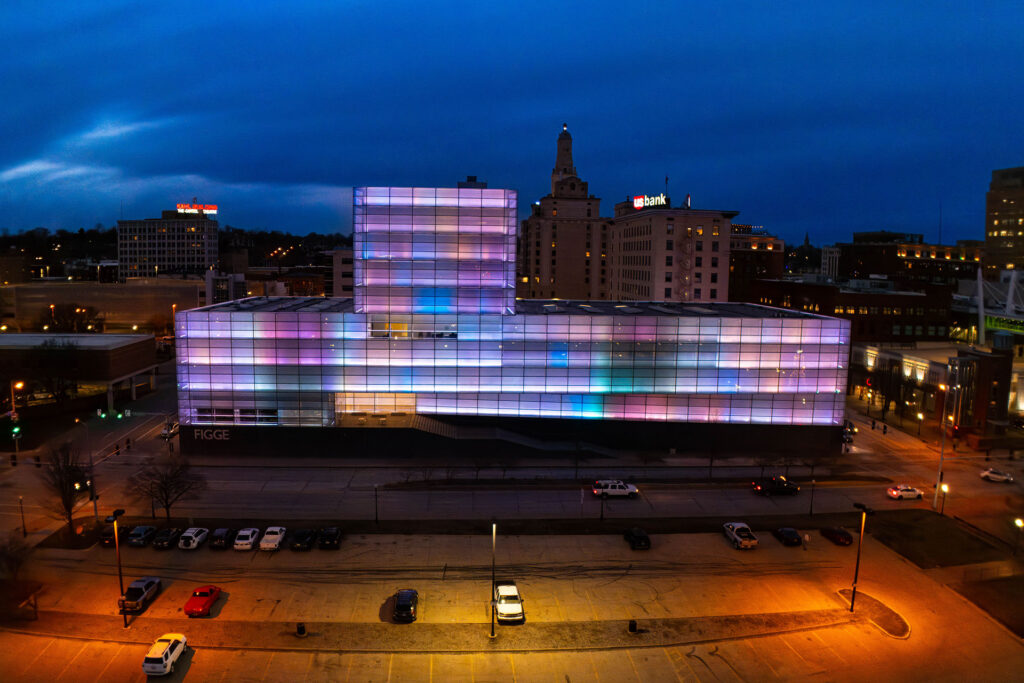
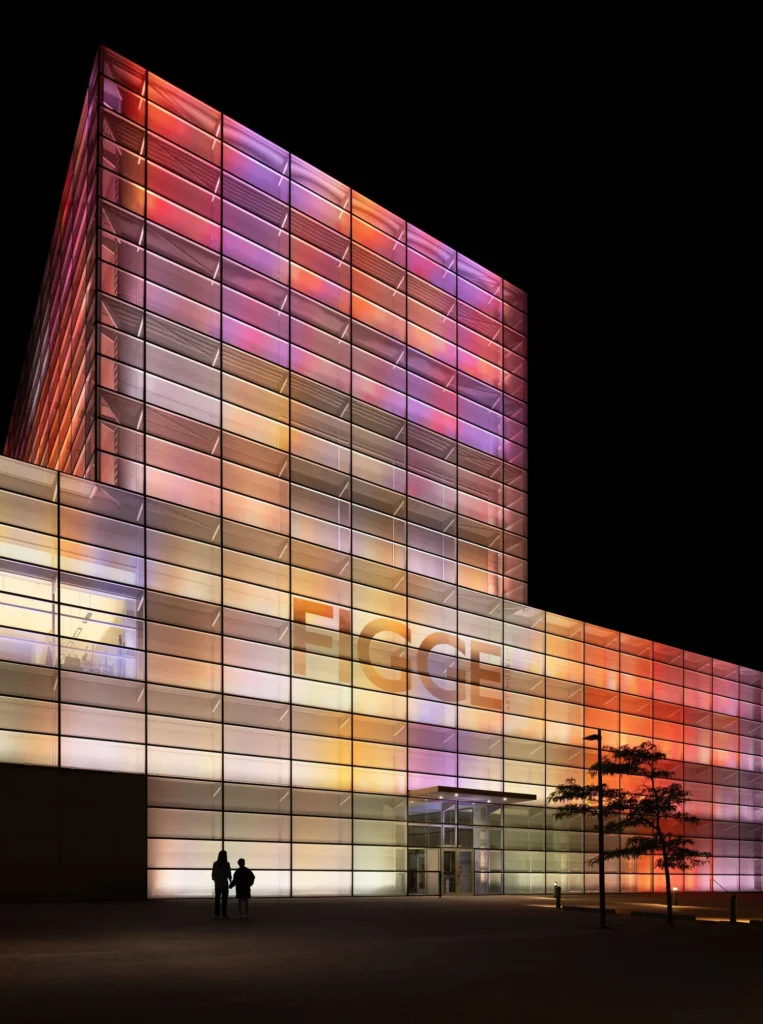
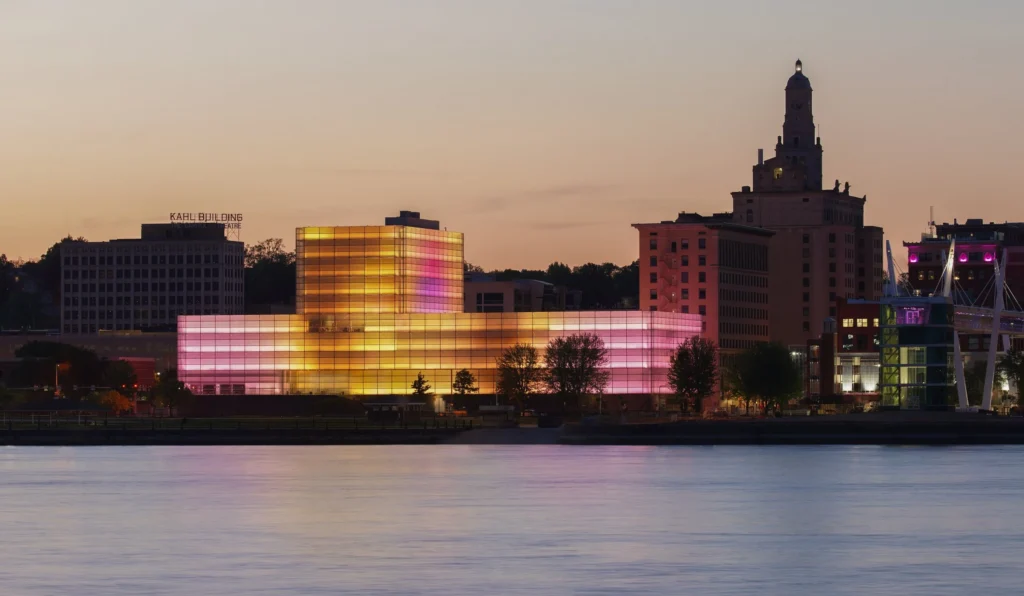
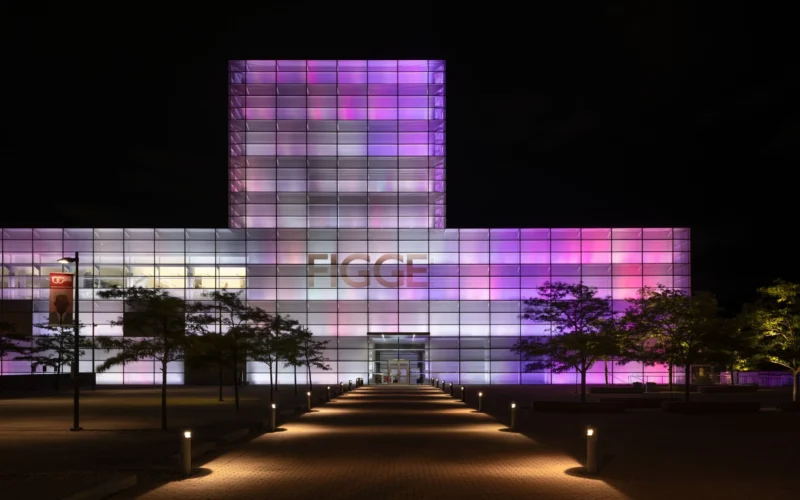
In 2025, in collaboration with Leo Villareal Studio and RDG Planning and Design, the Figge Art Museum unveiled Evanescent Field, a permanent light sculpture marking the museum’s Centennial anniversary. Now the largest public art installation in the State of Iowa, the project transforms the museum’s exterior into an ever-changing field of light that engages the city, the riverfront, and the surrounding community.
Evanescent Field
Created by Leo Villareal Studio, Evanescent Field explores impermanence through continuously dissolving and reforming waves of light. Programmed using generative code, the composition never repeats, offering a distinct experience with every viewing. The evolving patterns draw inspiration from natural systems, particularly the movement and atmosphere of the Mississippi River.
The Perfect Canvas
The Figge Art Museum features a 2.5-foot insulation chamber sandwiched between the exterior glass facade and the interior structure. Designed to isolate exterior temperature and humidity from the galleries, this cavity also houses a network of catwalks aligned with each floor of the building, providing access for cleaning and maintenance.
This unique architectural feature became an ideal canvas for light. Integrated discreetly within the insulation chamber, more than 1,000 STR10® Color Changing luminaires were installed along the catwalks using brackets and custom attachments, totalling over 5,000 linear feet or 1.5 kilometres. Each luminaire was carefully aimed and tuned to work in harmony with the building’s geometry, enabling even wall washing and revealing the facade with depth and clarity.